Historical Commission issues six-month delay to explore preservation options, including rare Rufus Porter-style murals and potential relocation
Reading, MA — One of Reading’s Oldest Homes Faces Demolition; Historical Commission Imposes Six-Month Delay
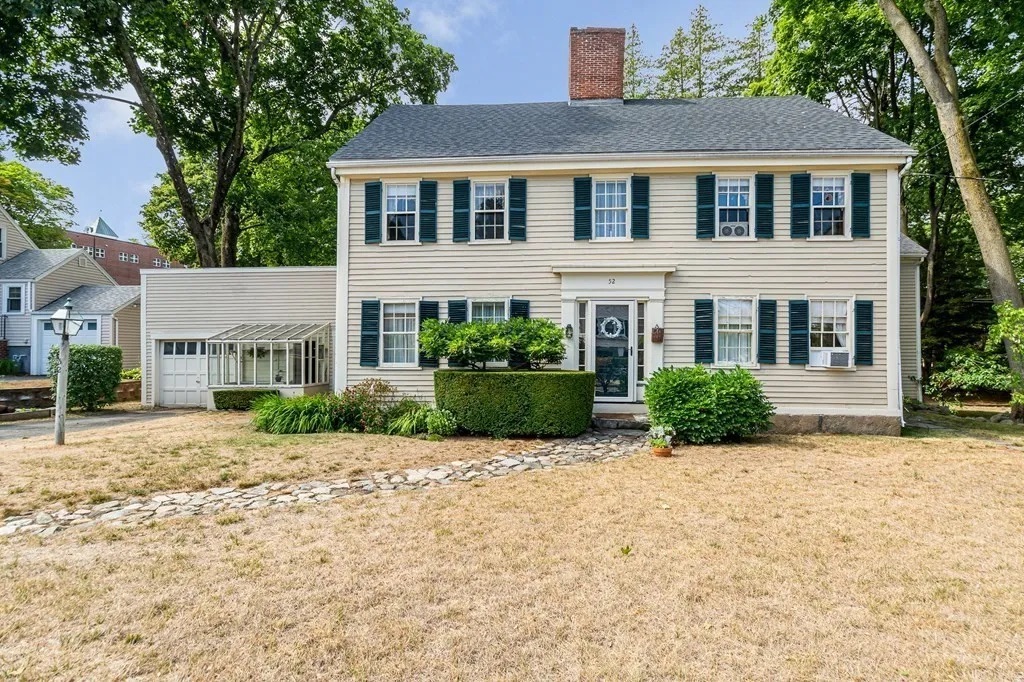
One of Reading’s oldest surviving homes — the 1792 Parker House at 52 and 52½ Salem Street — is facing possible demolition following a permit application submitted by the property’s new owners, John Burns and Giuseppe Ravida.
Located just east of the Common and abutting Memorial Park, the timber-framed home is among the town’s earliest remaining residential structures. The current proposal seeks full demolition of the existing building, and the construction of two attached townhomes and an accessory dwelling unit.
According to the applicants, the historic structure presents significant challenges, including low ceiling heights, outdated stair configurations, and difficulty adapting to meet modern residential, safety, and building code requirements.
At a public hearing held on February 11, the Reading Historical Commission (RHC) voted 5–0 to impose a six-month demolition delay under the town’s bylaw governing historically significant properties. A demolition delay does not permanently prohibit demolition; rather, it provides a limited window of time to explore alternatives and to ensure the appropriate documentation of important historic features.
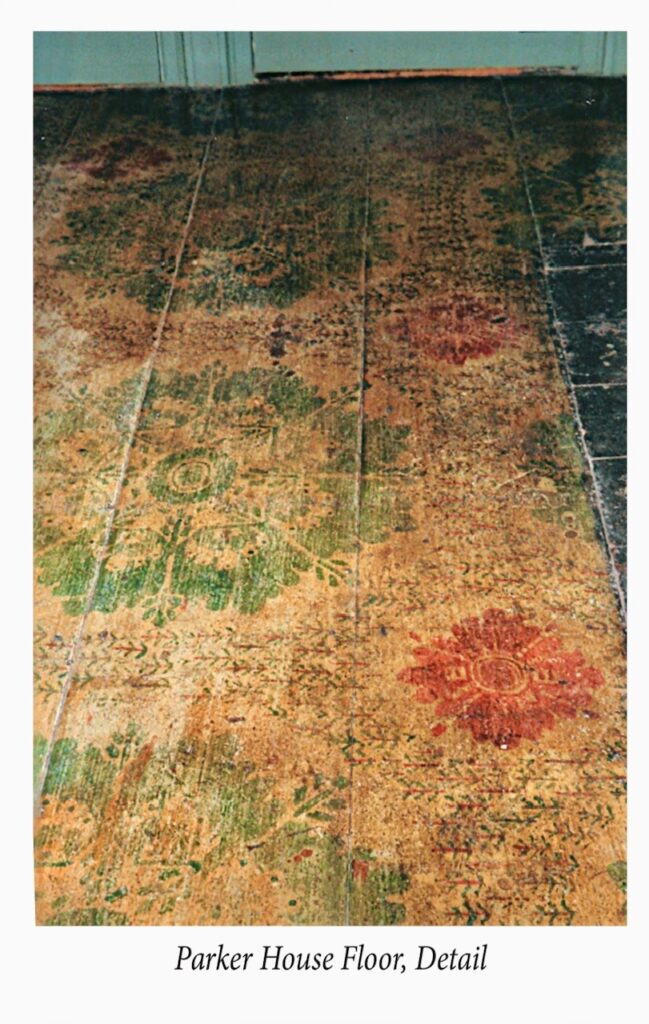
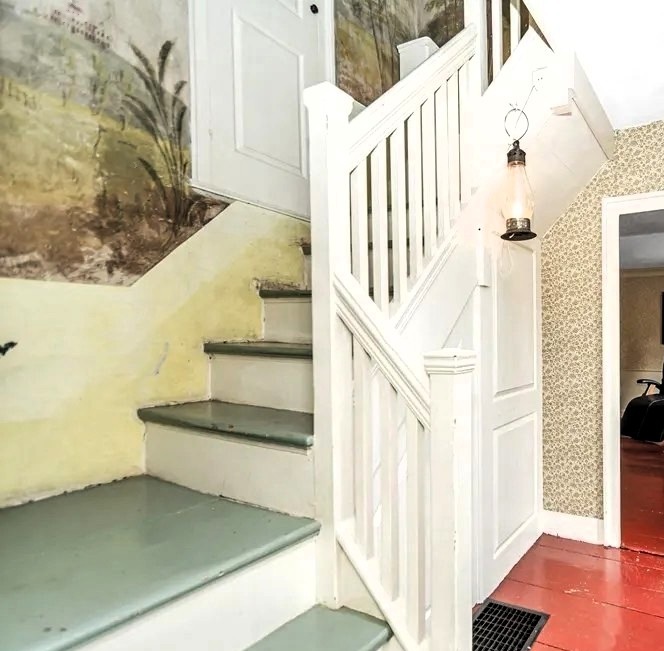
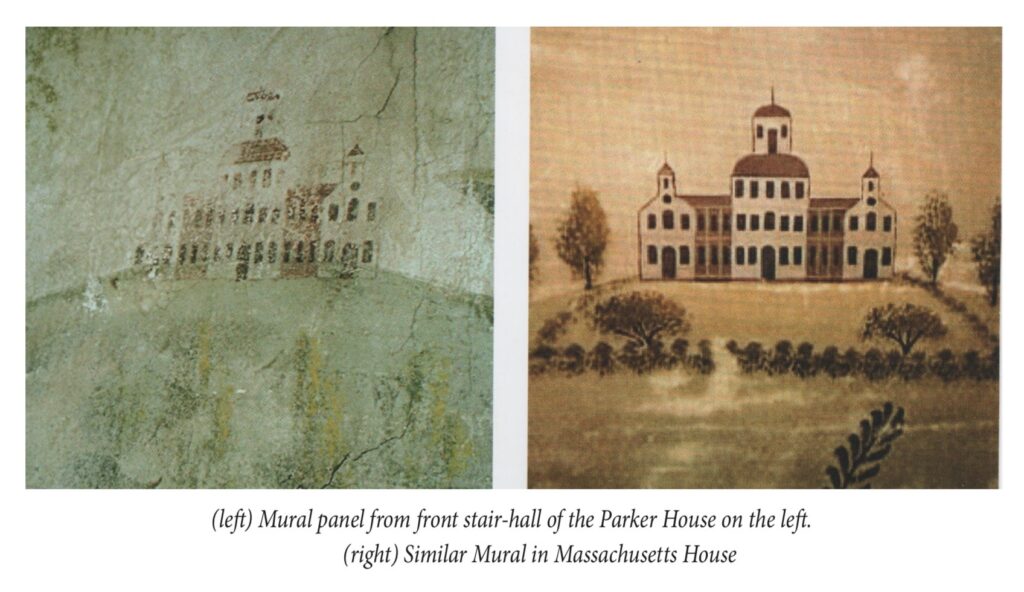
Prior to the hearing, the owners granted the RHC access to document the property’s interior and exterior. Of particular interest is a mural on the plaster walls of the front staircase and second-floor hallway, executed in the style of noted New England muralist Rufus Porter. Porter-style murals are a distinctive and increasingly rare example of early American folk art. Additionally, a stenciled floor in the master bedroom is alleged to be attributed to Rufus Porter. Both the mural and the floor stenciling had previously been featured in the Nov. 2022 issue of The Decorator – Journal of the Historical Society of Early American Decoration, written by Ann Eckert Brown.
To determine whether the mural, or portions of it, might be preserved, the Commission has enlisted specialists at the Peabody Essex Museum and the Center for Painted Wall Preservation for guidance on potential conservation or removal options.
As part of the delay period, the Commission will document the structure by photograph and assess whether significant architectural elements can be salvaged. The owners have also indicated a willingness to make the building available at no cost to any party capable of relocating it. While relocating historic homes has precedent in Reading, recent estimates suggest such moves can exceed $100,000, making relocation a significant undertaking.
The six-month delay provides time to evaluate these possibilities, though it does not guarantee a preservation outcome. Details regarding the property’s historic significance are available through the state’s Massachusetts Cultural Resource Information System database (MACRIS) and on the RHC page on the town website at https://www.readingma.gov/729/Historical-Property-Form-BS.
The RHC encourages residents interested in learning more about the Parker House or the demolition delay process to follow its updates in the months ahead. The RHC holds its meetings on the second Wednesday of the month at 6:30 PM at Town Hall. The Commission can also be reached by email at RHC@ci.reading.ma.us.