
Authorities Say Scheme Included Smuggling and Selling Tiger, Orangutan, and Other Protected Animal Parts
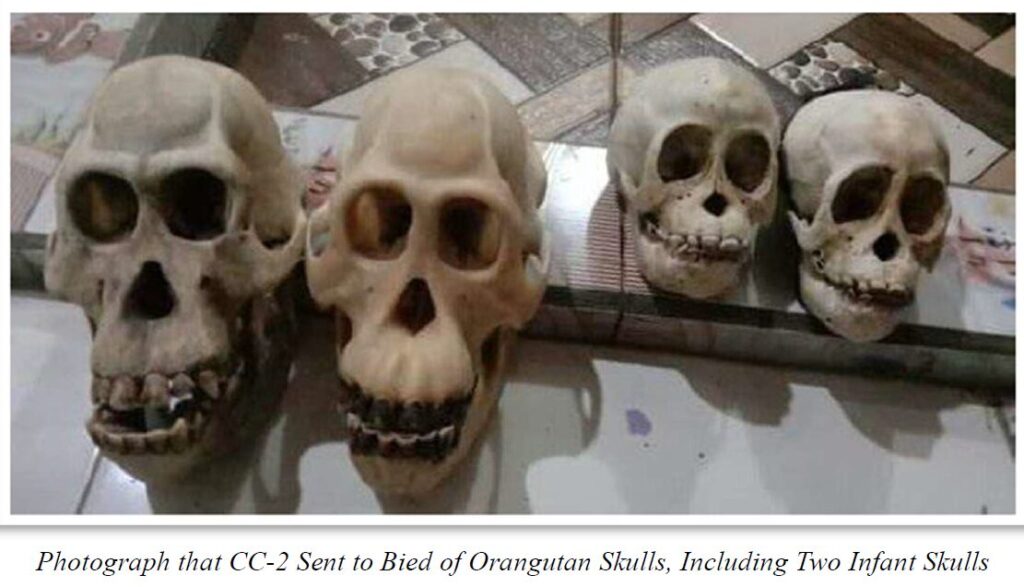
BOSTON — A Reading man has been sentenced in federal court for his role in an international wildlife trafficking scheme involving endangered and protected species, federal authorities announced.
Adam Bied, 40, was sentenced by U.S. Senior District Court Judge F. Dennis Saylor IV to eight months in prison, followed by two years of supervised release. He was also ordered to pay a $75,000 fine to support wildlife enforcement efforts. Bied pleaded guilty in January 2026 to two counts of conspiracy to smuggle goods into the United States and two counts of violating the Lacey Act.
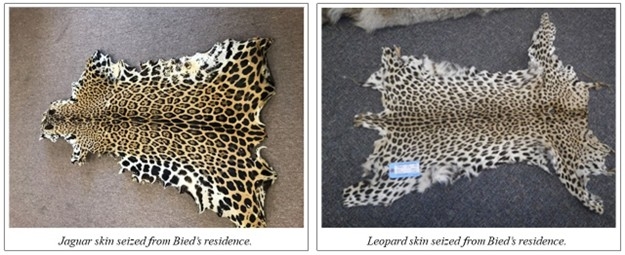
According to prosecutors, Bied illegally imported and sold wildlife parts protected under the Endangered Species Act and the Convention on International Trade in Endangered Species of Wild Fauna and Flora. The items included skulls from orangutans and tigers, as well as jaguar and leopard skins and other animal remains. None of the shipments were declared to the U.S. Fish and Wildlife Service, as required by law.
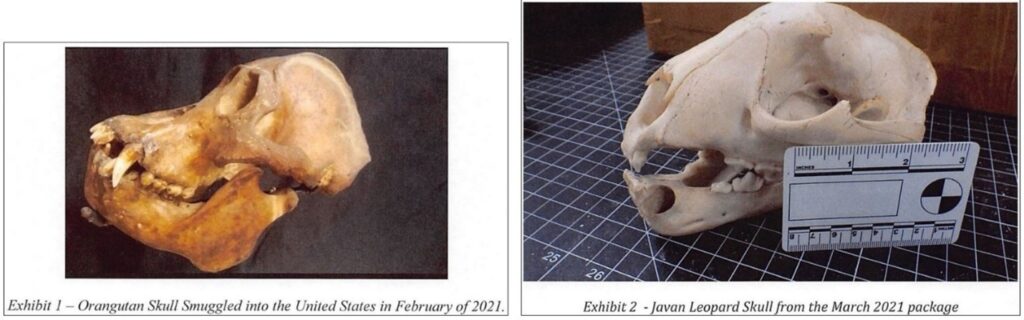
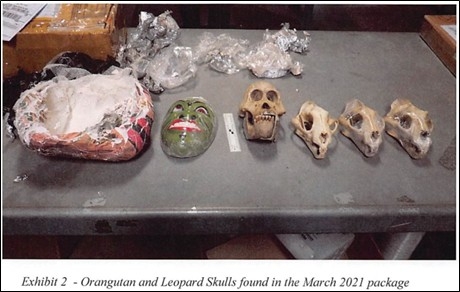
Authorities said that from at least 2018 through 2021, Bied coordinated with suppliers in Cameroon and Indonesia to obtain wildlife parts from poached animals. He then imported the items into the United States and resold or traded them domestically. Investigators found that Bied sought out rare specimens, including skulls from gorillas, chimpanzees, pangolins, and other protected species.
The wildlife parts identified in the civil forfeiture complaint include:
- Orangutan skulls
- Tiger skulls
- Leopard skin, skulls and a claw
- Jaguar skin and skull
- African lion skulls
- Polar bear skull
- Narwhal tusk
- Otter skeleton
- Harp seal skull
- Pangolin skull
- South American fur seal skull
- Elephant seal skull
- Babirusa skulls
- Mandrillus skulls
- Wallaby skull
- Jackal skull
In communications with a co-conspirator in Cameroon, Bied discussed acquiring animal parts and even offered to provide money for ammunition in exchange for skulls. He also instructed suppliers to avoid sending skulls with visible bullet holes and emphasized his demand for rare items to satisfy customers.
Bied was aware of wildlife protection laws but took steps to evade detection, authorities said. Shipments were falsely labeled as items such as “decorative masks” and “rodents” to avoid scrutiny by customs officials. In one instance, Bied sold two illegally imported leopard skulls to an undercover federal agent, falsely claiming the items were decades old and legally obtained.
In July 2021, federal agents seized more than 100 wildlife parts from Bied’s home, storage unit, and vehicle. Bied has agreed to forfeit the items, which include skulls from orangutans, tigers, leopards, jaguars, African lions, and a polar bear, as well as a narwhal tusk and other protected species.
“Trafficking in the remains of endangered and protected animals is not a collector’s hobby—it is a crime that fuels the exploitation of vulnerable species around the world,” said U.S. Attorney Leah B. Foley in a statement. “This sentence holds the defendant accountable and sends a clear message that those who profit from illegal wildlife trade will be prosecuted.”
Assistant Director Doug Ault of the U.S. Fish and Wildlife Service’s Office of Law Enforcement said the case highlights the global impact of wildlife trafficking, which threatens already vulnerable species and undermines conservation efforts.
The investigation was conducted by the U.S. Fish and Wildlife Service, the U.S. Marshals Service, and the Department of Justice’s Environmental Crimes Section. Assistant U.S. Attorneys Jason Casey and Carol E. Head prosecuted the case, with Head also handling the related civil forfeiture proceedings.
Federal officials emphasized that laws including the Endangered Species Act, the Lacey Act, and CITES strictly regulate the import, export, and sale of protected wildlife and their parts, requiring proper permits and declarations for any legal trade.